
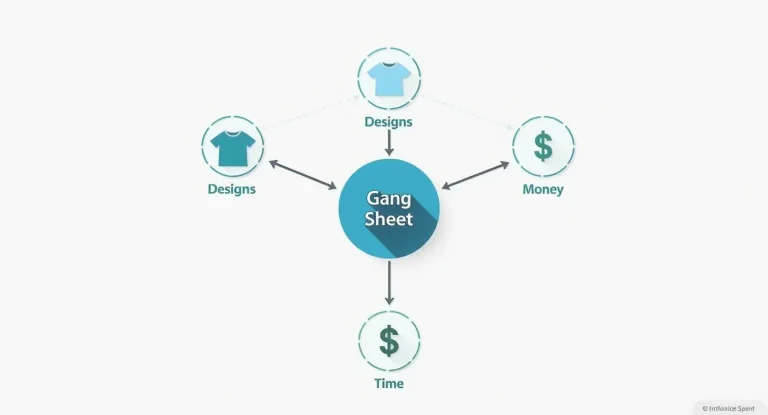
DTF gangsheet workflow is a cornerstone of efficient direct-to-film production, transforming multiple designs into a single, print-ready sheet that can be produced with minimal handling and predictable results, reducing touchpoints and simplifying file management for teams. By aligning this process with a broader DTF printing workflow, studios can optimize color management, reduce material waste, accelerate batch throughput, and maintain consistent quality across diverse garments, seasons, and product lines. From artwork prep for DTF to precise tiling, careful margins, and reliable DTF layout software, the gangsheet approach depends on clean assets, standardized data, and repeatable layout steps that scale across different fabrics and sizes. DTF quality control checks help catch color shifts, registration errors, and edge-to-edge gaps before printing, safeguarding consistency and minimizing rework across the full sheet, with traceability for compliance. With a data-driven, repeatable workflow, you maximize printer output, lower setup time, and build a scalable process that supports growth while preserving design integrity and audit-ready records.
Beyond the explicit term, this concept is best understood as a method for consolidating many designs onto one printable surface for film-based transfer, a strategy that mirrors broader print production workflows. It can also be framed as a layout-driven production pipeline, where artwork preparation, tiling logic, color management, and final verification come together in a unified process. Using tools like DTF layout software and a standardized QC checklist helps maximize sheet usage, reduce waste, and ensure consistent color reproduction across garments.
DTF gangsheet workflow: from artwork to a production-ready sheet
The DTF gangsheet workflow represents the end-to-end journey from individual designs to a single, ready-to-print sheet. By aligning artwork prep, tiling strategy, and printing steps, this workflow minimizes setup time and reduces ink waste while preserving color accuracy across designs. Embracing a cohesive DTF printing workflow helps you scale production without sacrificing quality.
In practice, this means starting with clean artwork, advancing through efficient layout planning, and finishing with robust quality control and production handoff. By focusing on the entire pipeline—from artwork prep for DTF through to the final gangsheet—you create a repeatable process that thrives on consistency, precise margins, and reliable color management. The result is faster turnaround and more predictable outcomes for every batch.
Artwork prep for DTF: building a solid foundation for perfect gang sheets
Artwork preparation lays the foundation for a successful gangsheet. Adhering to consistent color profiles, clean vector and high-resolution raster assets, and transparent backgrounds reduces surprises when designs are tiled on a single sheet. This stage directly supports downstream steps in the DTF printing workflow and sets the stage for strong DTF quality control later in the process.
Best practices include using standard color profiles (like sRGB or printer ICCs), ensuring vector elements are outlined when appropriate, and maintaining at least 300 dpi resolution for raster elements at the intended print size. Defining margins and safe zones early helps prevent important artwork from being trimmed or misaligned during gangsheet tiling, leading to clearer typography and crisper details on fabric.
DTF layout software: choosing tools for precise tiling and color control
DTF layout software is the command center for turning prepared artwork into an efficient gangsheet. Look for features that support tiling, margins, bleed, orientation options, and robust color management. A good tool provides a centralized color catalog and reliable export data to keep designs consistent across multiples, which directly enhances the DTF printing workflow.
Beyond tiling, the right software streamlines workflow by enabling batch processing, preserving design integrity across repeats, and simplifying export to printer-ready formats. Compatibility with file formats, embedding color profiles, and clear project organization are essential for maintaining color fidelity and reducing rework during the gangsheet creation process.
Gang sheet optimization: maximizing sheet usage and minimizing waste
Gang sheet optimization focuses on layout efficiency to maximize fabric yield and minimize material waste. Plan the sheet layout in rows and columns, starting with the largest blocks to optimize space while maintaining uniform margins. Good tiling strategies cut down the number of sheets required and streamline subsequent production steps.
Consider orientation and rotation to exploit fabric width without compromising readability. Include appropriate bleed regions to prevent white gaps after trimming, and maintain consistent color data across repeated blocks to avoid drift on the final gangsheet. Efficient optimization also benefits from standardized settings in the DTF layout software and a repeatable workflow that reduces reprints.
DTF quality control: ensuring color accuracy, registration, and durable results
Quality control is the backbone of a reliable gangsheet. A rigorous QC process catches issues early, preserving color fidelity and alignment across the entire sheet. Visual inspection, color matching checks, and post-processing verification help ensure each tile prints true to proof and maintains legibility after curing.
During printing and drying, monitor feed stability, registration marks, and color output. Regularly calibrate printers and verify consistency against proofs. A strong DTF quality control regime reduces waste, avoids reprints, and provides customers with consistent, vibrant results on every fabric type.
Exporting and production integration: from design to fulfillment
The final step is exporting production-ready files and integrating gangsheet data with fulfillment workflows. Use universal formats that preserve embedded color profiles and document all required color data for the printer. Well-organized file naming and version control save time during reprints and client requests.
Establish a clear data link between gangsheet files and customer orders, sizes, and fabrics. This enables smoother handoffs to production and reduces downstream errors. By aligning export conventions, file organization, and documentation with the DTF printing workflow, you create a scalable process that supports faster turnaround and consistent quality.
Frequently Asked Questions
What is the DTF gangsheet workflow, and how does it improve production efficiency in a print-on-demand operation?
The DTF gangsheet workflow is the end-to-end process of arranging multiple designs on a single sheet for direct-to-film printing. It boosts production efficiency by maximizing sheet usage, reducing ink waste, and improving color consistency across designs, with artwork prep, layout planning, tiling, and quality control forming the core.
How can I optimize artwork prep for DTF to support a reliable DTF gangsheet workflow?
Focus on consistent color profiles (use sRGB or printer ICCs), clean vector and high-resolution raster assets (300 dpi), transparent backgrounds, and clearly defined margins and safe zones. This solid artwork prep for DTF reduces rework and helps the DTF gangsheet workflow stay crisp from design to print.
What role does DTF layout software play in gang sheet optimization within the DTF gangsheet workflow?
DTF layout software enables precise tiling, row-and-column planning, bleed and margin control, orientation options, and centralized color management. It lets you preview and adjust the gangsheet before printing, driving gang sheet optimization within the DTF gangsheet workflow.
Which quality control checks are essential for DTF quality control during the gangsheet workflow?
Key checks include a pre-print digital proof, printer color calibration, visual inspection of tile color and registration, monitoring for misfeeds during print, and post-curing verification to ensure legibility and color integrity across the gangsheet.
How do you approach color management and proofing to maintain color fidelity across designs in the DTF gangsheet workflow?
Establish consistent color profiles, generate proofs against swatches, and compare prints to proofs during production. Maintain a centralized color catalog and embed color data to minimize drift across the DTF gangsheet workflow.
What are common tiling pitfalls in gang sheet tiling and how can you mitigate them within the DTF gangsheet workflow?
Common issues include mismatched margins, bleed gaps, misalignment between tiles, and edge-to-edge color blocks. Mitigate by standardizing margins and bleed, defining safe zones, using test tiles, and enforcing a clear file-naming convention to support gang sheet optimization and DTF quality control.
| Topic | Key Points | Practical Takeaways |
|---|---|---|
| Introduction / Overview | DTF gangsheet workflow turns artwork into a single production-ready sheet. Benefits include time savings, reduced ink waste, and ensured color accuracy across designs. End-to-end approach starts with artwork and ends with the ready gangsheet. | Focus on aligning art prep, layout strategy, and quality control to maximize printer output and minimize setup time. |
| Understanding the DTF Gangsheet Workflow | End-to-end process of placing multiple designs on a single sheet for direct-to-film printing. Benefits include faster production and lower material waste. Requires planning, precise tiling, and robust color management. | Plan carefully, manage margins/bleed, and select suitable software/tools to keep designs aligned and print-ready. |
| From Artwork to Print Prep | Foundational phase: artwork preparation sets up layout and printing success. Best practices include consistent color profiles, clean assets, transparent backgrounds, and defined margins/safe zones. | Best practices: use standard color profiles (e.g., sRGB/ICC), ensure vector assets are outlined, raster assets at 300 dpi, keep backgrounds transparent, and define safe zones. |
| Layout and tiling | Translate prepared art into an efficient gangsheet layout. Key tactics include tiling to maximize sheet usage while preserving color accuracy and design integrity. | Tile planning (rows/columns), uniform margins, mindful orientation/rotation, bleed management, and centralized color management to prevent drift. |
| Printing and workflow efficiency | Printing hinges on a streamlined process that connects artwork, layout, and printer capabilities. Improvements reduce setup time and ensure consistent ink coverage. | Implement pre-print verification, color calibration, prepared materials, optimized print settings, and ongoing monitoring during print runs. |
| Quality and color control | Quality control catches issues early to maintain batch variance within acceptable ranges. Focus areas include color fidelity and clean tiling. | Use visual inspection, color matching checks, proper drying/curing, and post-processing verification to ensure consistency across tiles. |
| Exporting and production integration | Finalize print-ready files and integrate with production processes. Export conventions vary by software but share common goals of clarity and traceability. | Adopt universal formats with embedded color data, maintain organized file naming, document version history, and ensure data links to fulfillment. |
| Putting it all together / Repeatable flow | A repeatable workflow emerges from a tight loop of artwork prep, layout planning, printing, QC, and handoff. Standardization and robust tooling drive predictability and scalability. | Establish color profiles, bleed/margin settings, and file-naming conventions to maintain a steady production rhythm as you scale. |